Sleeping under the stars in the Sahara is the most-requested experience on every Morocco itinerary — and the one people have the most questions about. "Is it glamping or actual camping?" "Will I freeze?" "Can I charge my phone?" After organizing 500+ desert trips, here's the honest guide.
Two Types of Camp
Every Sahara camp falls into one of two categories. The price difference is significant, but so is the experience.
| ⭐ Standard Camp | ✨ Luxury Camp | |
|---|---|---|
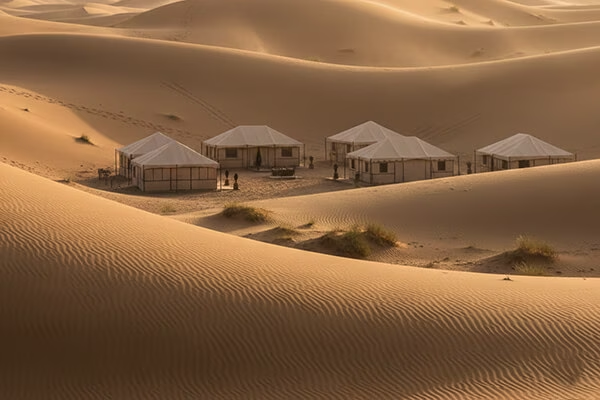
| Tent | Simple Berber tent, shared | Private canvas suite, furnished |
| Bed | Mattress on floor with blankets | Real bed frame, quality mattress, linens |
| Bathroom | Shared, basic (squat toilet) | Private, hot shower, flush toilet |
| Electricity | Limited (solar for lights) | Generator or solar (charging stations) |
| Meals | Basic tagine dinner, bread breakfast | Multi-course dinner, full breakfast buffet |
| Activities | Campfire, drums, stargazing | Same + sandboarding, 4x4, spa treatments |
| Price level | Budget-friendly | Several times higher |
Insider Tip
If you're on a budget, standard camps are perfectly fine — the magic of the Sahara is the landscape and the stars, not the thread count. If you're celebrating a special occasion or want Instagram-ready tents, luxury camps are unforgettable. Both types include the same camel ride, sunset, and Berber music.
What a Desert Night Looks Like
Whether standard or luxury, the experience follows the same rhythm:
- 3:30-4:00 PM: Arrive at the dune edge. Meet your camels. Start the 45-60 minute camel trek into the dunes. This is the iconic moment — the caravan silhouette against orange sand.
- 5:00 PM: Reach camp. Settle into your tent. Climb a dune for sunset views — the sky turns every shade of orange and pink. This alone is worth the trip.
- 7:00 PM: Dinner. Traditional tagine or multi-course meal around the campfire. Berber musicians play drums and sing traditional songs.
- 9:00 PM: Stargazing. The Sahara has zero light pollution — you'll see the Milky Way with your naked eye, shooting stars every few minutes. Lie on a dune and let the silence sink in.
- 5:30 AM: Wake-up call. Climb the highest dune for sunrise over an ocean of sand. The light changes the dune colors from purple to gold in minutes.
- 7:00 AM: Breakfast, then camel ride back to the vehicle.
Where: Erg Chebbi vs. Erg Chigaga
Morocco has two main dune fields. Both are spectacular, but very different:
| Erg Chebbi (Merzouga) | Erg Chigaga (M'Hamid) | |
|---|---|---|
| From Marrakech | 9-10 hours (2-day journey) | 8-9 hours + 2-hour 4x4 |
| Dune height | Up to 150m (tallest in Morocco) | Up to 300m (truly massive) |
| Tourism level | Moderate-high (most popular) | Low (remote, harder access) |
| Camp options | Many (standard to ultra-luxury) | Few (mostly standard + some luxury) |
| Best for | First-timers, short trips (3 days) | Adventurers, solitude seekers (4+ days) |
For most visitors, Erg Chebbi (Merzouga) is the right choice — it's easier to reach, has more camp options, and the dunes are iconic. See our Agafay vs. Sahara comparison if you're short on time.
3-Day Sahara Desert Tour
What to Pack for Desert Camping
- Warm layers: Fleece, warm socks, beanie. Even in summer, nights cool dramatically.
- Head covering: Your guide provides a traditional turban, but bring a buff/bandana for the camel ride.
- Closed shoes: Sand is scorching in afternoon. Sandals only for camp.
- Camera/phone: Fully charged. No outlets at standard camps (luxury camps have charging).
- Toiletries: Standard camps have basic facilities. Bring hand sanitizer, wet wipes, and toilet paper as backup.
- Water: Bring 2-3 liters extra. Camps provide water but having backup is smart.
- Flashlight/headlamp: Essential for navigating camp at night.
Insider Tip
Put your phone in airplane mode and enjoy the silence. The Sahara at night, without phone screens, is one of the most profound experiences you'll ever have. The stars, the wind, the absolute stillness — it resets something in your brain. Don't scroll through Instagram. Be here.
Frequently Asked Questions
What is a luxury desert camp like in Morocco?
Luxury camps feature individual canvas tents with real beds (often king-size), private bathrooms with hot showers, electricity, heating/AC, decorative rugs, and sometimes even WiFi. Common areas include dining tents, fire pits, and lounges. The experience feels like a boutique hotel in the dunes.
How cold does the Sahara get at night?
Desert nights are surprisingly cold. In winter (Dec-Feb), temperatures drop to 0-5°C. In spring/autumn, expect 10-15°C at night. Even in summer, nights cool to 15-20°C. All camps provide blankets, but bring warm layers. Luxury camps have heating; standard camps rely on thick blankets.
Is sleeping in the Sahara safe?
Yes, very safe. Reputable camps have permanent staff, secure locations, and are far from any roads. There are no dangerous animals in the Erg Chebbi dunes. The only risks are dehydration (drink water), sunburn (use SPF), and getting sand in everything (it's the desert). Your guide stays at camp overnight.
How do you get to a Sahara desert camp?
Most visitors reach the Sahara via a 2-3 day tour from Marrakech, driving through the Atlas Mountains and stopping at Ouarzazate and the Dades/Todra Gorges. The final leg is a 45-60 minute camel ride from the edge of the dunes to the camp deep inside Erg Chebbi (Merzouga). Some luxury camps offer 4x4 transfers instead of camels.