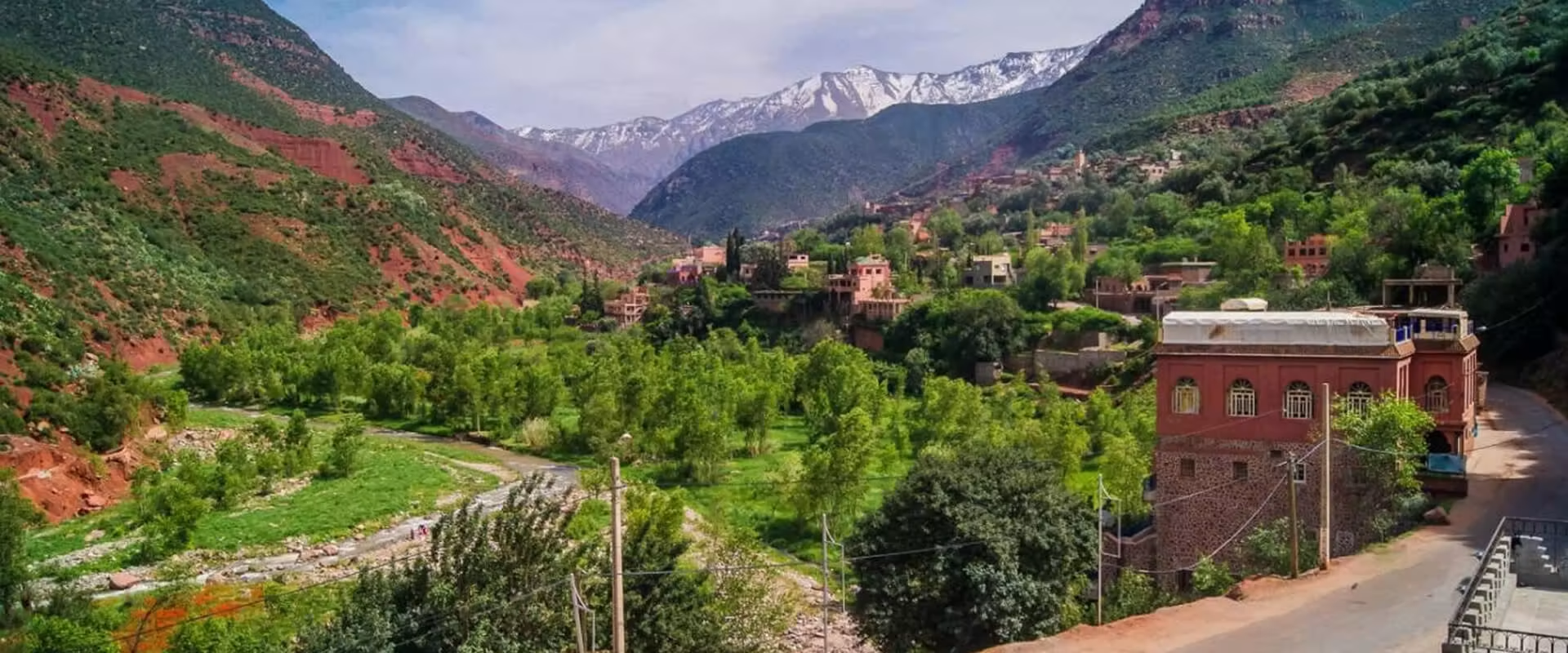
Visible from every rooftop in Marrakech, the Atlas Mountains are Morocco's dramatic backbone — snow-capped peaks rising to 4,167 meters, just 90 minutes from the chaos of the medina. Whether you want a gentle valley walk or North Africa's highest summit, this guide covers every option.
Day Trips from Marrakech
All of these can be done as a comfortable day trip, leaving Marrakech at 8-9 AM and returning by 5-6 PM.
Ourika Valley — The Easy Option
Distance: 60 km (1.5 hours from Marrakech)
Difficulty: Easy
The most accessible Atlas experience. Drive through Berber villages into a lush green valley with a river running through it. The main hike leads to Setti Fatma waterfalls — 7 cascades, though most visitors reach the first 2 (30-minute easy climb). Lunch at a riverside restaurant with your feet literally in the water. Perfect for families and non-hikers.
Ourika Valley Full-Day Excursion
Imlil & Armed Village — The Mountain Taste
Distance: 65 km (1.5 hours from Marrakech)
Difficulty: Moderate
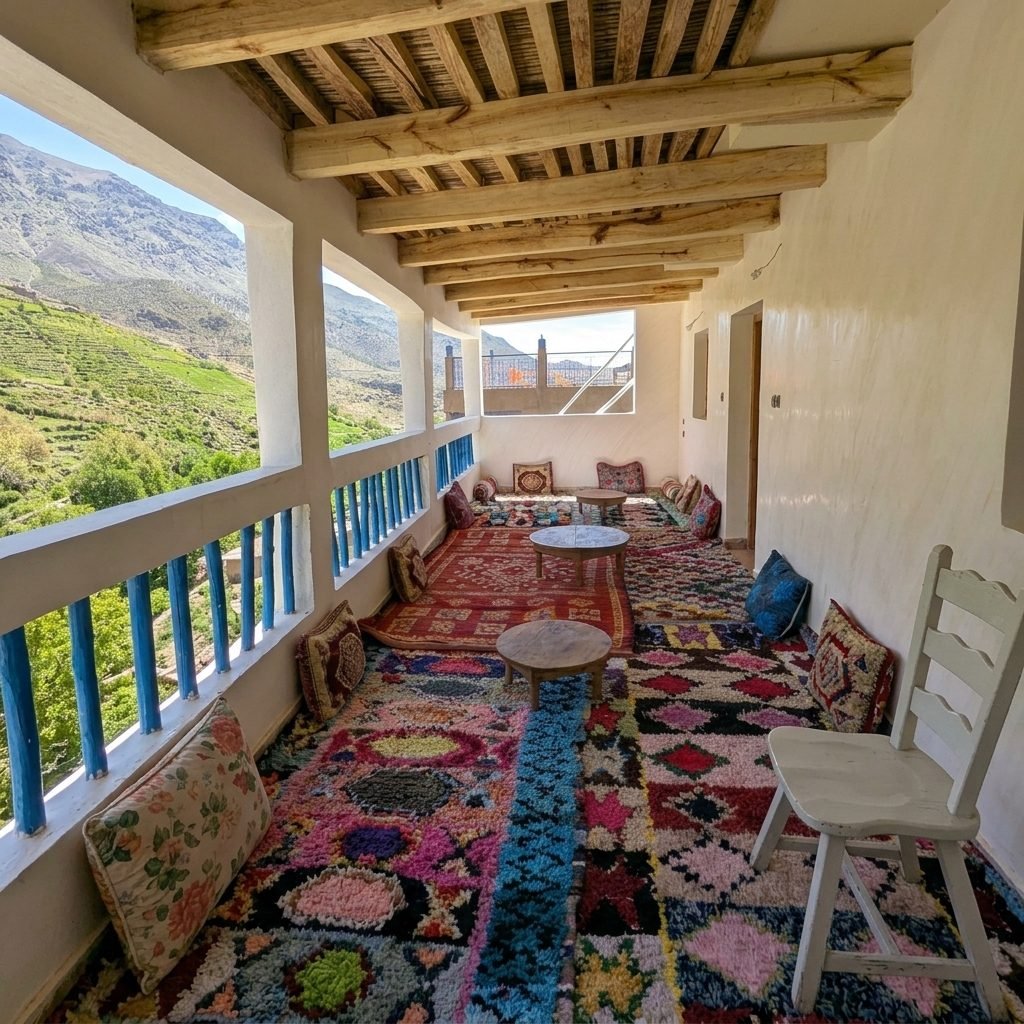
Imlil is the base camp for Toubkal and a beautiful mountain village at 1,740m altitude. Day-trippers can hike to the Armed village (1 hour, stunning views), visit a traditional Berber home for tea, and walk through walnut and cherry orchards. The air is noticeably cooler — a relief from Marrakech heat. More adventurous hikers can push to the Tizi n'Mzik pass (3,400m, full day).
Ouzoud Waterfalls — The Spectacle
Distance: 150 km (2.5 hours from Marrakech)
Difficulty: Easy
Morocco's most impressive waterfall — 110 meters of cascading water in three tiers. Boat rides at the base take you right under the spray. Look for the Barbary macaque monkeys in the olive groves. The surrounding area has swimming pools and riverside cafés. Best in spring when water volume is highest.
Insider Tip
Ourika Valley floods in spring (March–April) and after heavy rain. The river can rise dramatically in hours. Check weather conditions before going, and avoid hiking to the upper waterfalls if it's been raining. Your guide will know if conditions are safe.
Mount Toubkal (4,167m) — The Summit
The highest peak in North Africa. Summiting Toubkal is a bucket-list achievement that requires no technical climbing — just fitness, determination, and a certified mountain guide.
The Standard 2-Day Route
- Day 1: Drive from Marrakech to Imlil (1.5 hours). Trek to the Toubkal Refuge at 3,207m (4-5 hours hiking). Overnight in the refuge (basic bunks, hot meals).
- Day 2: Pre-dawn start (5 AM). Summit via the south cirque route — steep scree and switchbacks for 3-4 hours. Reach the summit by 9-10 AM. Panoramic views of the entire Atlas range and, on clear days, the Sahara. Descend to Imlil (4-5 hours total). Drive back to Marrakech.
What You Need
| Item | Details |
|---|---|
| Certified guide | Mandatory, for the whole trek |
| Mule for luggage | Recommended |
| Fitness level | Good. You should be able to walk 6+ hours uphill |
| Footwear | Sturdy hiking boots with ankle support |
| Warm layers | Summit can be -10°C even in summer |
Insider Tip
Don't underestimate the altitude. At 4,167m, oxygen is 40% less than sea level. Drink 3-4 liters of water on summit day, eat high-energy snacks, and tell your guide immediately if you have a severe headache or nausea — these are early signs of altitude sickness.
Multi-Day Treks
For serious hikers, the Atlas offers world-class multi-day routes:
- Toubkal Circuit (3-4 days): A loop around the Toubkal massif through remote Berber villages, mountain passes, and alpine lakes. More rewarding than the direct summit route.
- Mgoun Traverse (4-6 days): Morocco's second-highest peak (4,071m) through the less-visited Central High Atlas. Wilder, more remote, and virtually tourist-free.
- Jebel Saghro (3-5 days): A volcanic desert mountain range between the Atlas and Sahara. Dramatic rock formations, gorges, and Berber nomad encounters. Best November–March.
What to Pack for Atlas Hiking
- Hiking boots — ankle support essential for scree and rocky trails
- Layering system — Base layer + fleece + windproof jacket. Temperature swings from 30°C to 0°C
- Sun protection — SPF 50+, sunglasses, hat. UV is intense at altitude
- Water — 2-3 liters minimum. Purification tablets for multi-day treks
- Headlamp — essential for pre-dawn Toubkal summit starts
- Cash — no ATMs in mountain villages. Bring enough for tips, water, and snacks
Frequently Asked Questions
Can you visit the Atlas Mountains as a day trip from Marrakech?
Absolutely. The Atlas foothills start just 30 minutes from Marrakech. The most popular day trips are Ourika Valley (1.5 hours, easy hike to waterfalls), Imlil village (1.5 hours, moderate trails), and Ait Ben Haddou (3 hours, cultural visit). All can be done in a full day with a private driver.
How hard is climbing Mount Toubkal?
Toubkal (4,167m) is a tough hike but NOT technical climbing — no ropes, no rock climbing. It requires good fitness, warm clothing, and 2 days (overnight at a mountain refuge). The summit day involves 8-10 hours of hiking with significant altitude gain. Altitude sickness is possible — acclimatize and go slowly. A certified guide is mandatory.
What is the best time to hike the Atlas Mountains?
April–June and September–October offer the best conditions: warm days (15-25°C), clear skies, and wildflowers in spring. July–August is very hot at lower elevations but fine at altitude. December–March brings snow above 2,500m — great for experienced hikers, but Toubkal requires crampons and winter gear.
Do you need a guide for the Atlas Mountains?
For day hikes in Ourika Valley or Imlil: a guide is recommended but not mandatory. Trails are marked and villages are nearby. For Mount Toubkal and multi-day treks: a certified mountain guide is mandatory (legally required above certain elevations). The guide arranges mules for luggage, refuge bookings, and route planning.